 GymPlan AI
Front Two-Dumbbell Raise
Front Two-Dumbbell Raise is a beginner isolation dumbbell exercise that mainly works your shoulders.
💪 Shoulders🏋️ Dumbbell📈 Beginner🔗 Isolation🎯 3 sets of 10-15 reps
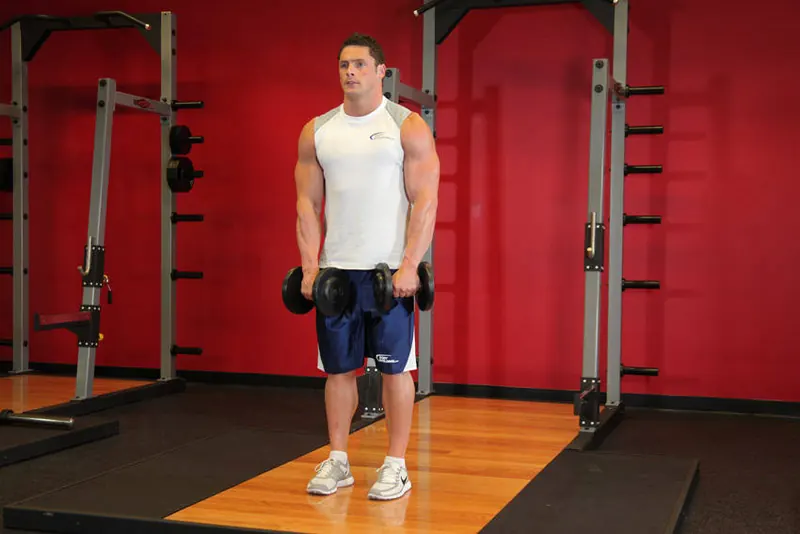

How to do the front two-dumbbell raise
- Pick a couple of dumbbells and stand with a straight torso and the dumbbells on front of your thighs at arms length with the palms of the hand facing your thighs. This will be your starting position.
- While maintaining the torso stationary (no swinging), lift the dumbbells to the front with a slight bend on the elbow and the palms of the hands always facing down. Continue to go up until you arms are slightly above parallel to the floor. Exhale as you execute this portion of the movement and pause for a second at the top.
- As you inhale, lower the dumbbells back down slowly to the starting position.
- Repeat for the recommended amount of repetitions.
Muscles worked
Primary: Shoulders
Sets and reps
Do 3 sets of 10-15 reps with 60-90 seconds of rest, using a weight you can control through the full range. Add reps first, then weight.
Track your front two-dumbbell raise with GymPlan AI
Log every set in seconds, see your progress on charts, and ask the AI coach to build a plan around your goals and equipment. 7 days free, no card needed.
Start your free trialFront Two-Dumbbell Raise alternatives
Exercises that train the same main muscle, including options with other equipment.
 Lateral RaiseDumbbell · Beginner
 Car DriversBarbell · Beginner
 Cable Lateral RaiseCable · Beginner
 Reverse Machine FlyesMachine · Beginner
 Band Pull ApartBand · Beginner
 Front Plate RaiseOther · Intermediate
FAQ
What muscles does the front two-dumbbell raise work?
It mainly works your shoulders.
How many sets and reps of front two-dumbbell raise should I do?
Do 3 sets of 10-15 reps with 60-90 seconds of rest, using a weight you can control through the full range. Add reps first, then weight.
Is the front two-dumbbell raise good for beginners?
Yes. It is a beginner-friendly movement: start light and focus on the form steps above.